Sabervet Feline Blood Typing Rapid Test
Blood transfusion therapy is the best treatment for anemia caused by various reasons, and blood type is the primary factor to consider in transfusions. Mismatched blood types between the donor and the recipient can trigger a transfusion reaction, which, in severe cases, may lead to death. Additionally, if a newborn kitten’s blood type does not match that of
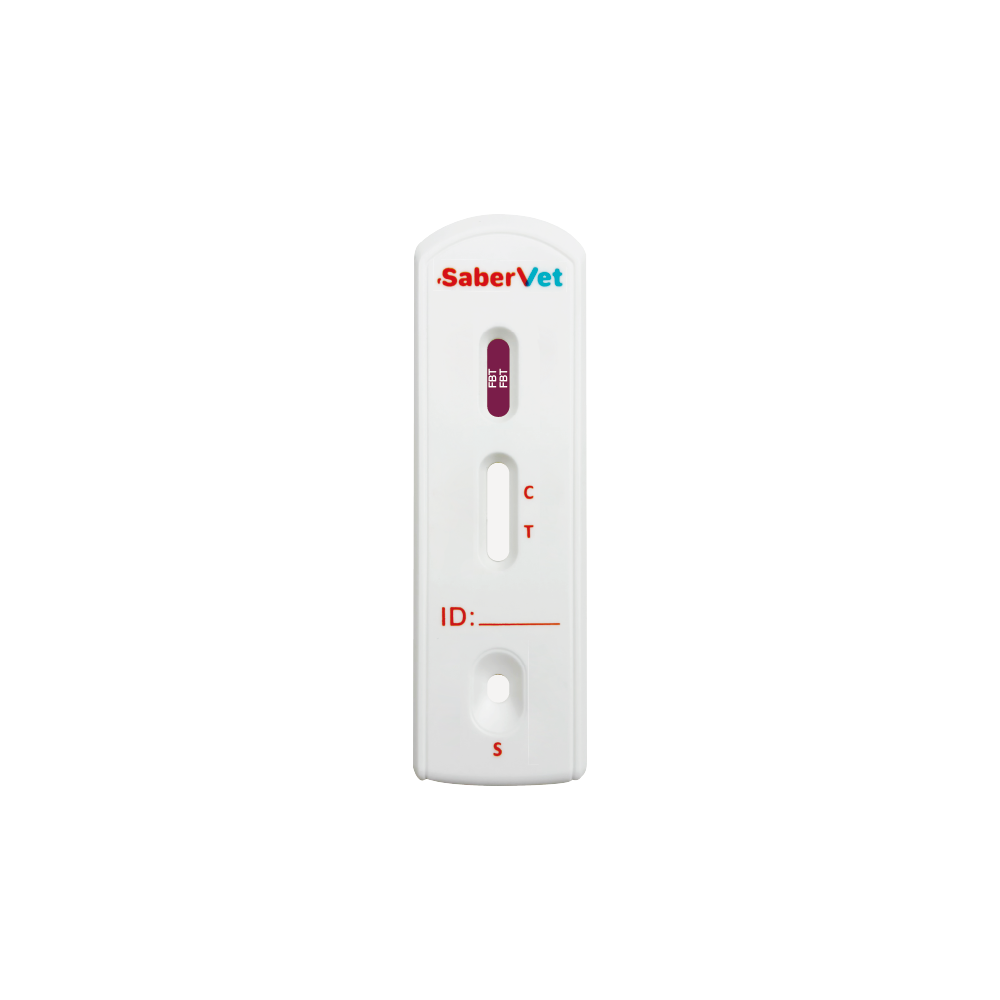
The blood type of cats is divided into three categories: A, B and AB. Detecting the blood type of cats is important for the safety of blood transfusion, prevention of haemolytic disease in newborns and reproduction in cats. Classification of Cat Blood Types AB blood group system: Type A: most common, most cats belong to type A.
Type B: relatively rare, more common in some specific breeds such as the English Shorthair and Devon Curly Cat. Type AB: very rare, containing A and B antigens. Mik blood group system: Mik positive: most cats are Mik positive. Mik negative: a few cats are Mik negative.
Inheritance of Cat Blood Types The AB blood group system in cats is controlled by a pair of genes, which are classified as A, B and AB. Type A: Determined by dominant inheritance of the A gene, i.e. AA or AB genotype. Type B: determined by recessive inheritance of the B gene, i.e. the BB genotype.
Type AB: determined by the co-dominant inheritance of the AB gene, i.e. the AB genotype. Cat blood group antibodies Natural antibodies: Type A cats: a small amount of anti-B antibodies may be present. Type B cats: high titres of anti-A antibodies are naturally present. Type AB cats: usually do not produce anti-A or anti-B antibodies.
Homologous immune antibodies: Cats do not immediately produce large amounts of antibodies during the first transfusion, but an acute haemolytic reaction may occur during the second transfusion.
Need pricing, samples or distributor terms?
Send your market, target product and quantity. We will reply by email.